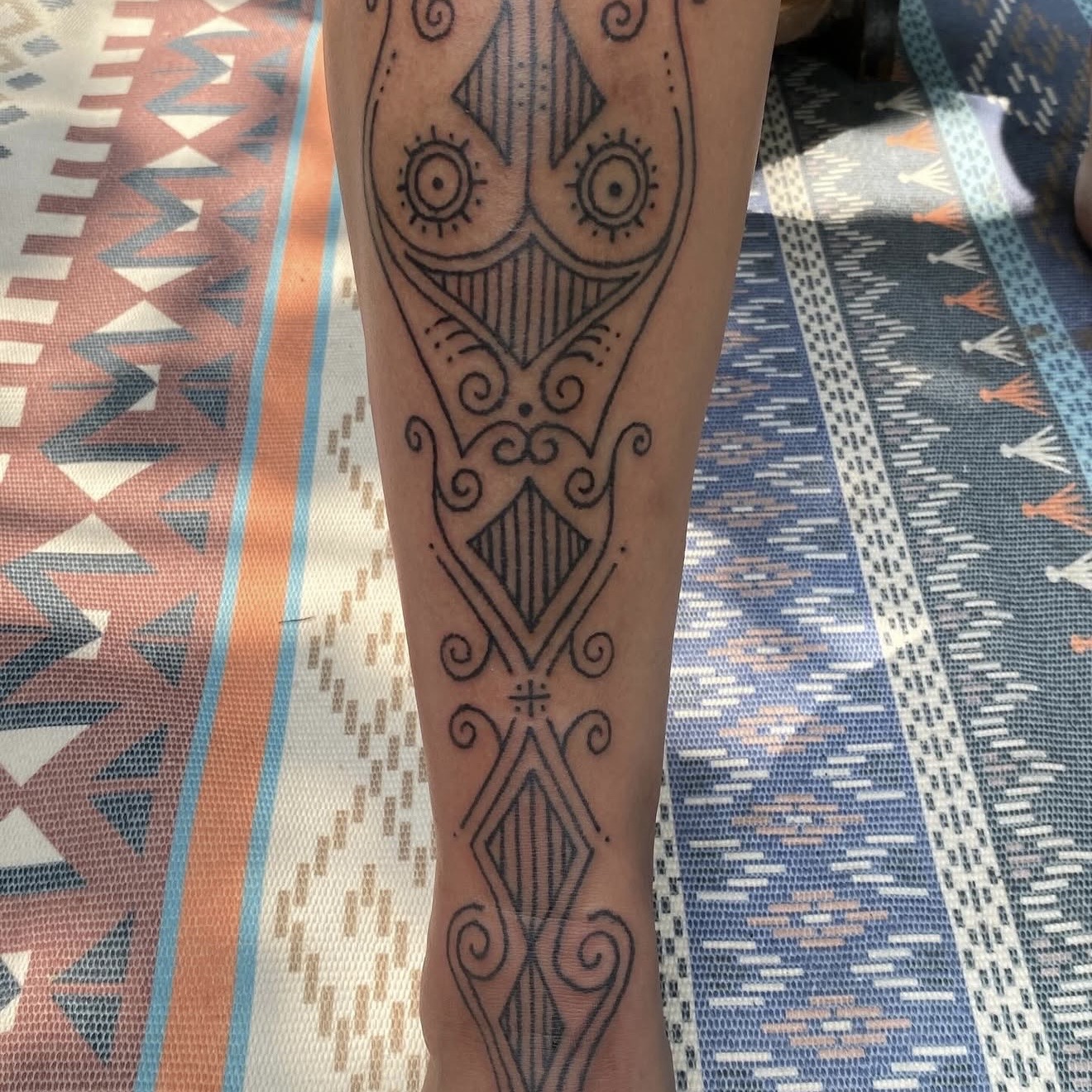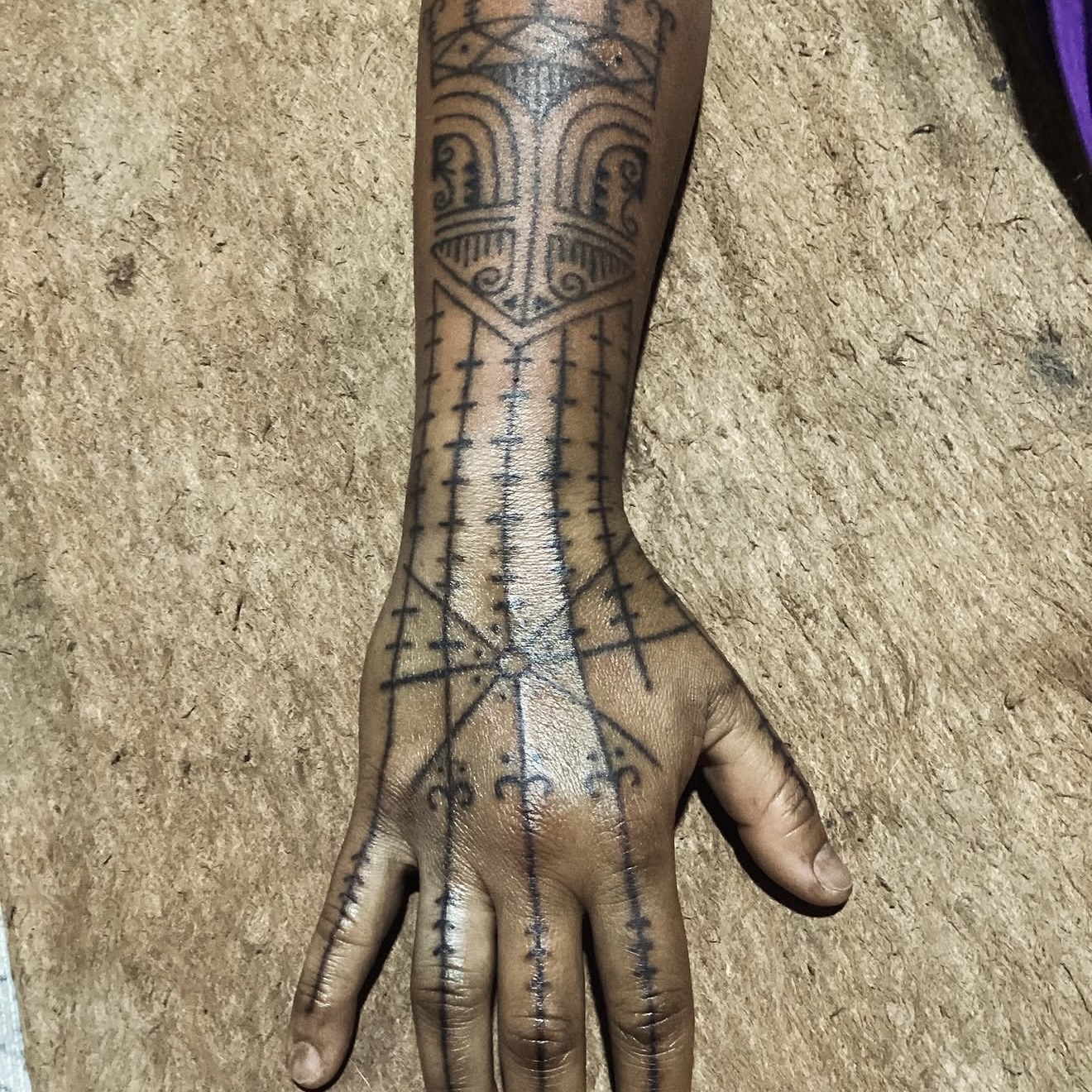
Titi
Mentawai, Siberut, IndonesiaThe marks that keep the world in balance.
On Siberut the tattoos are called titi, applied by a sipatiti through a wooden point tapped with a mallet, using ink ground from charcoal and plant material, and the work is preceded by ritual overseen by the sikerei, the shaman. The titi are read as markers of identity, status, and profession, and are bound up with the Mentawai sense of natural balance, the belief that the things of the world should be carried on the body.
One widely repeated claim holds that Mentawai tattooing is the oldest in the world, older than Egypt, traced to the researcher Ady Rosa; however, a peer reviewed anthropological paper reviewing those sources concluded the oldest in the world assumption is unfounded, so it is best understood as a popular assertion rather than established fact. Missionaries arriving from 1901 campaigned against the indigenous belief system and the practice nearly vanished, surviving mainly among older sikerei in Siberut's interior before a recent revival among younger Mentawai.
Those who carry it forward
The Keepers
2 artists