Iban
Borneo, SarawakThe flower beneath the collarbone, worn for the journey.
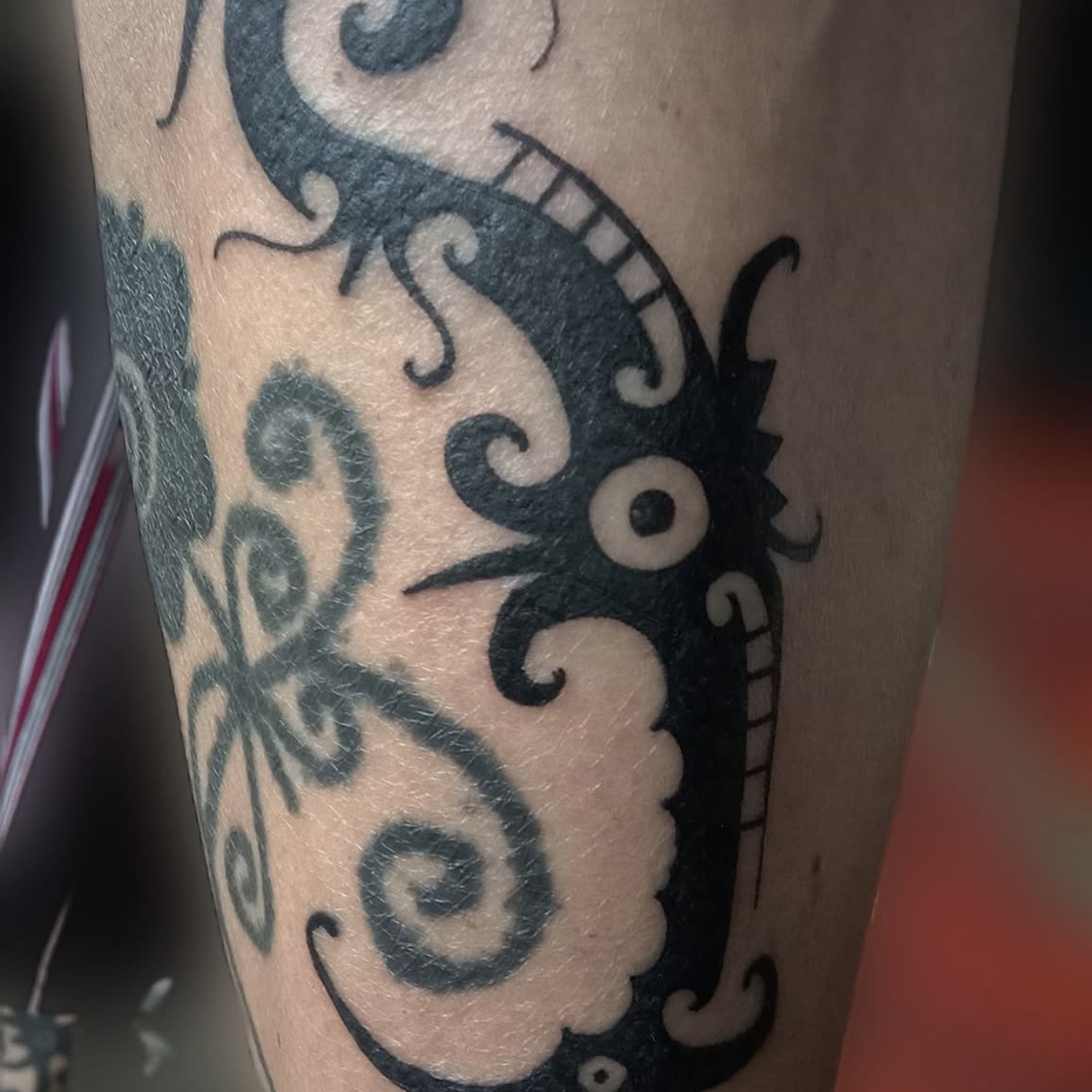
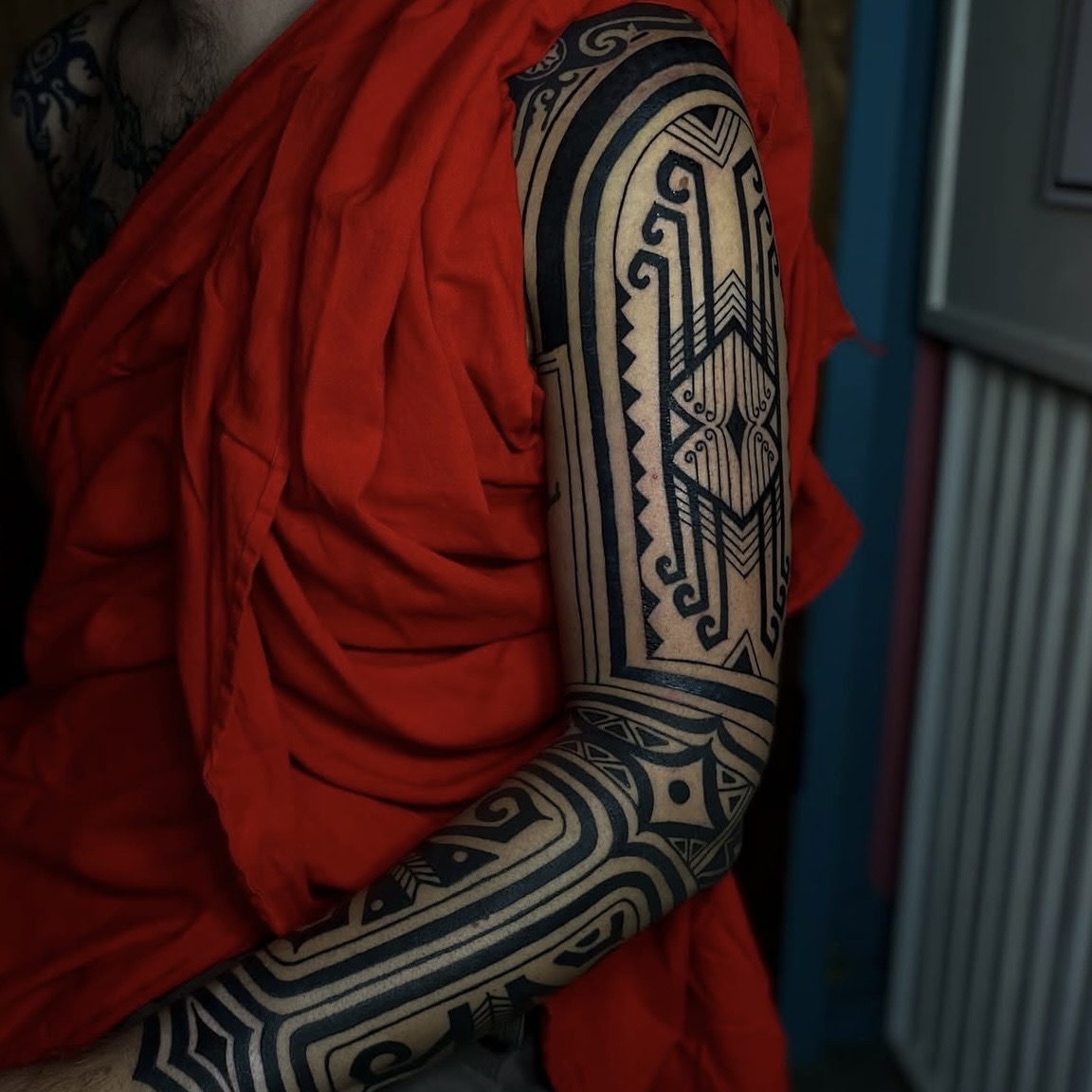
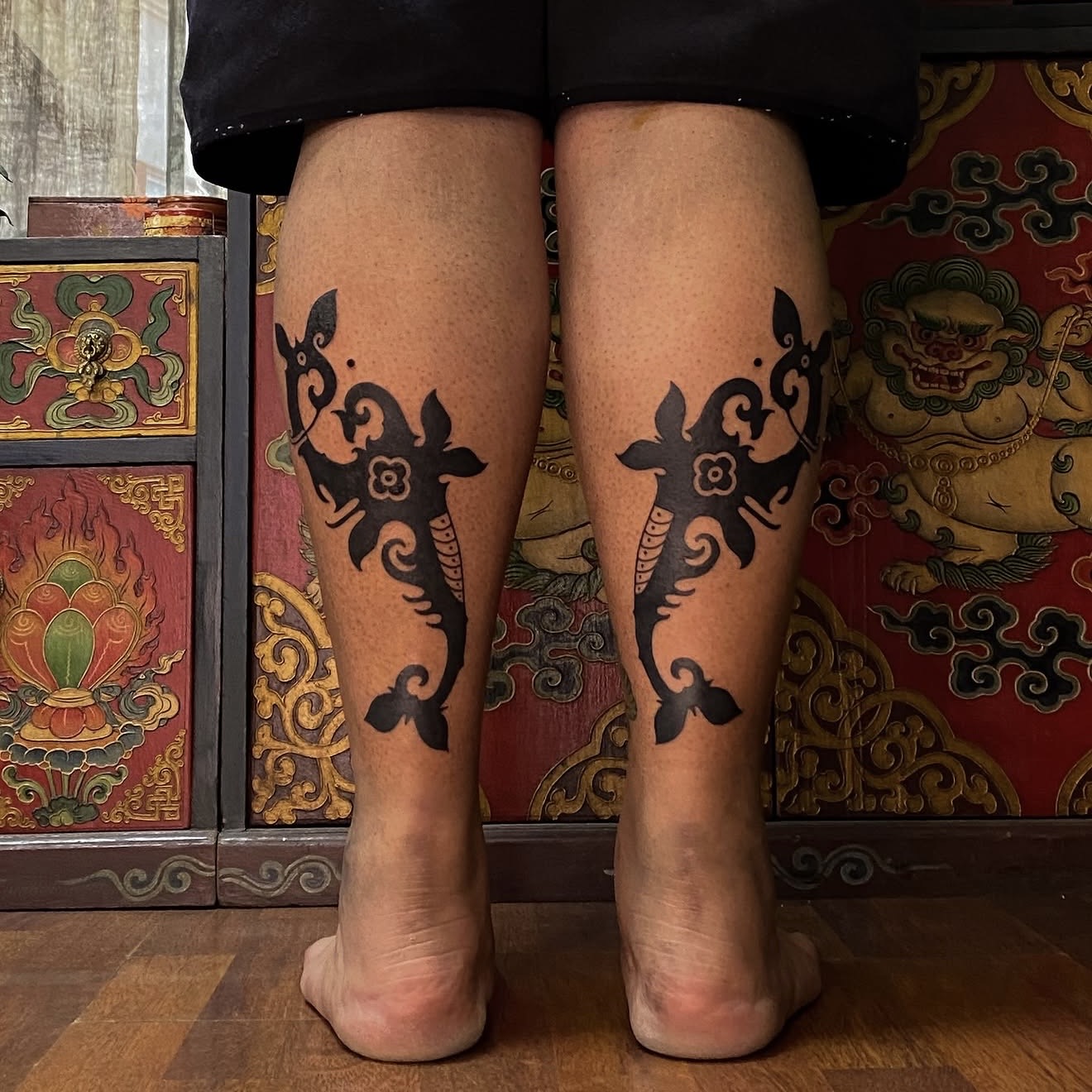
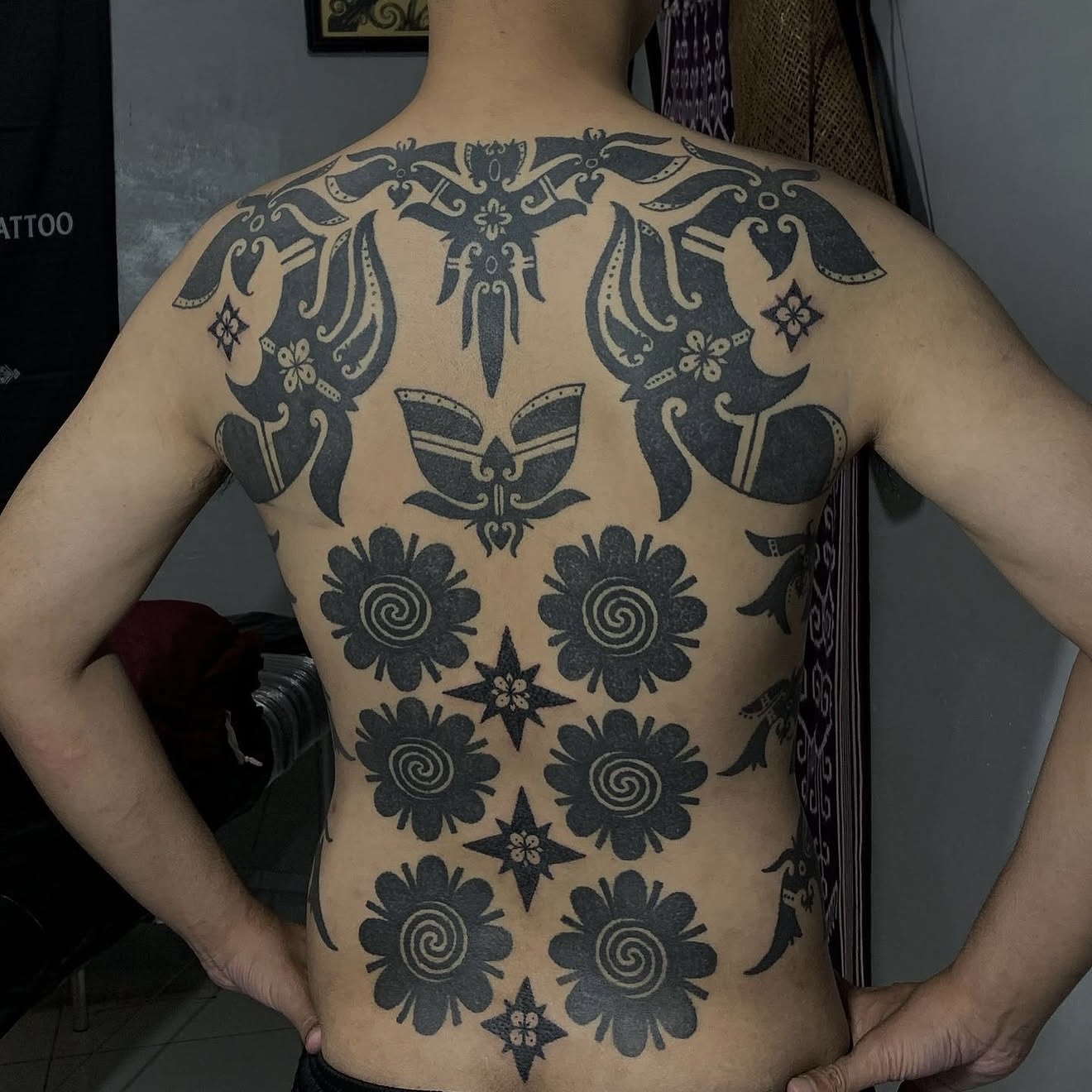
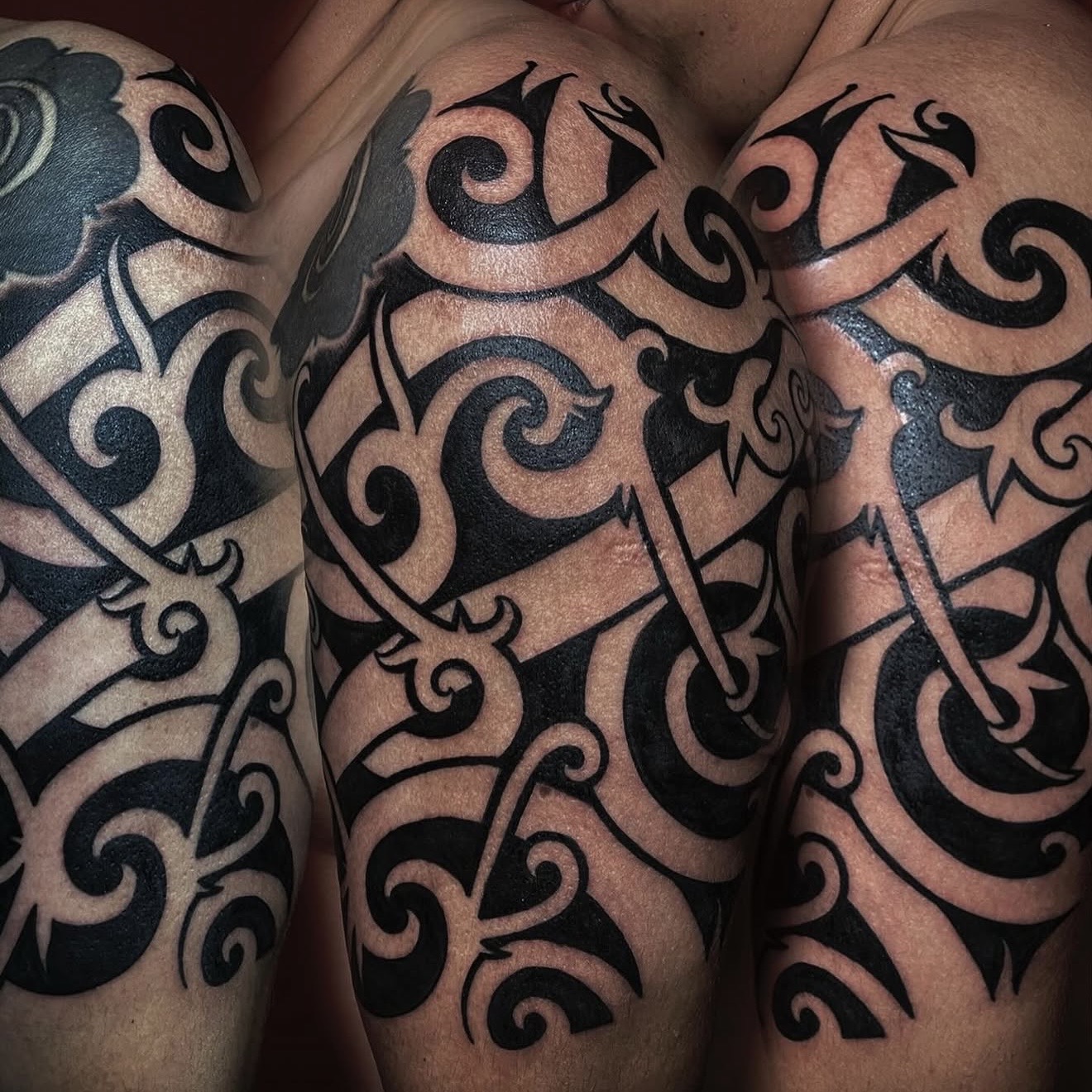
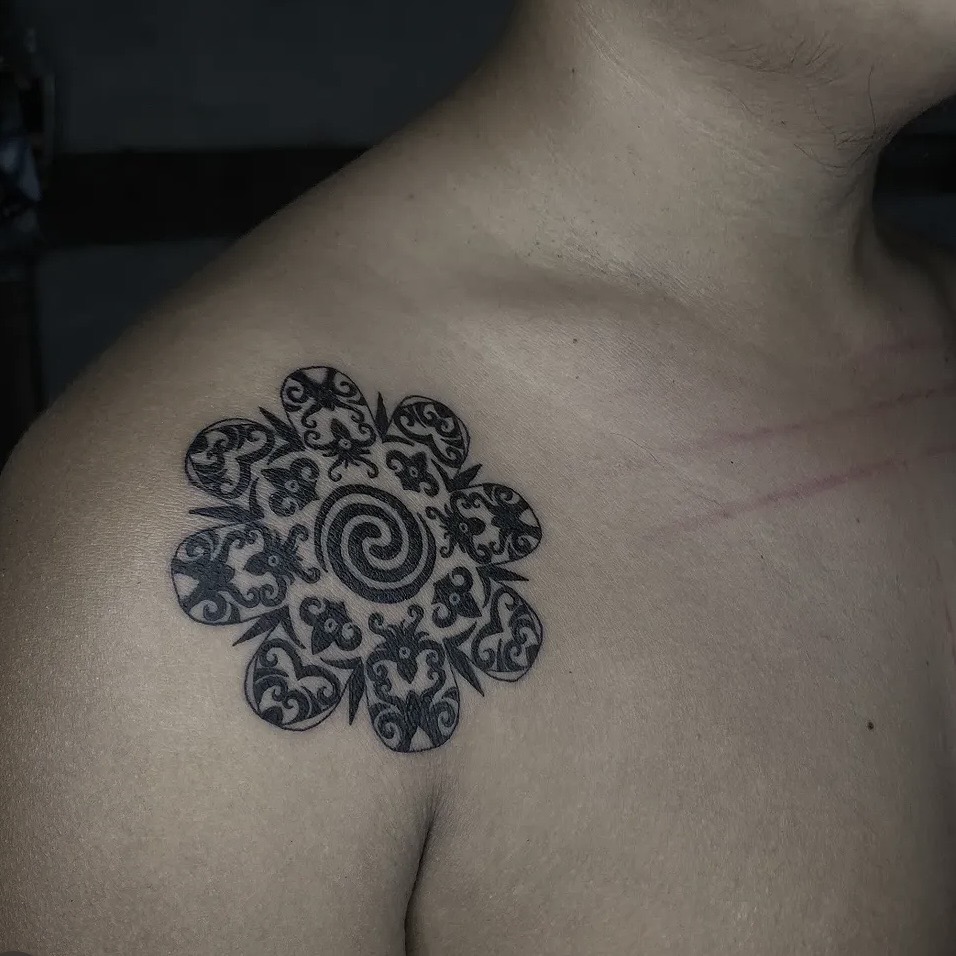
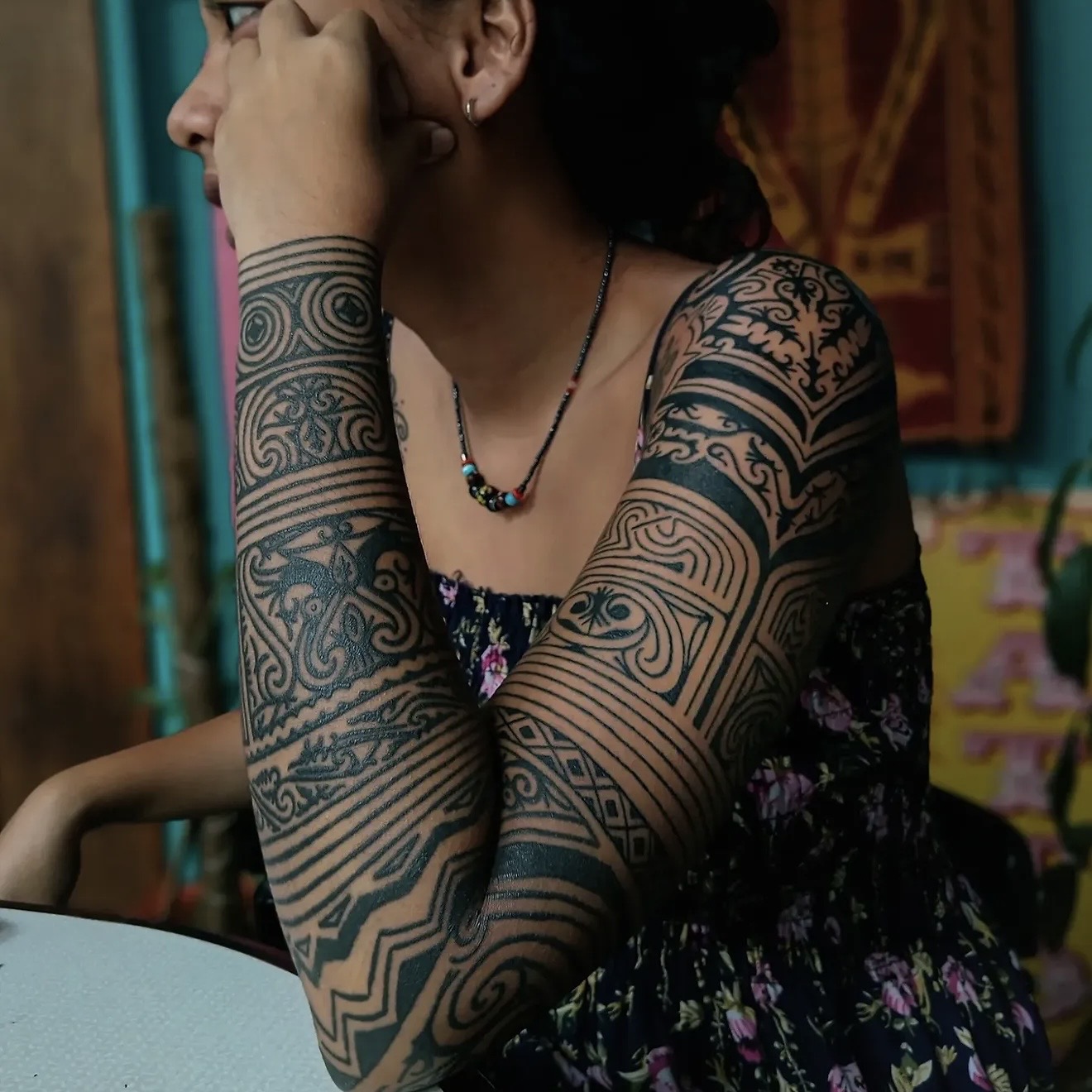
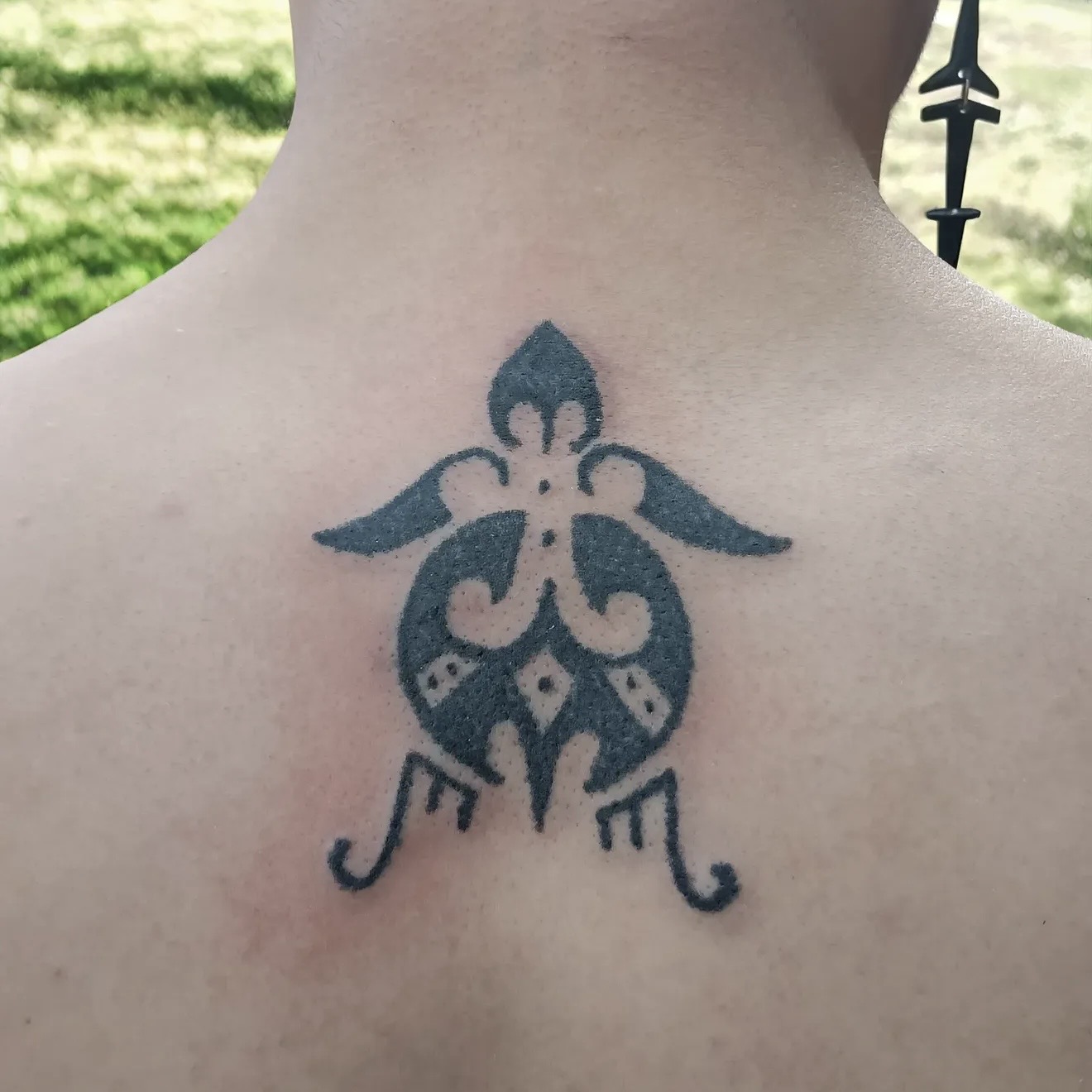
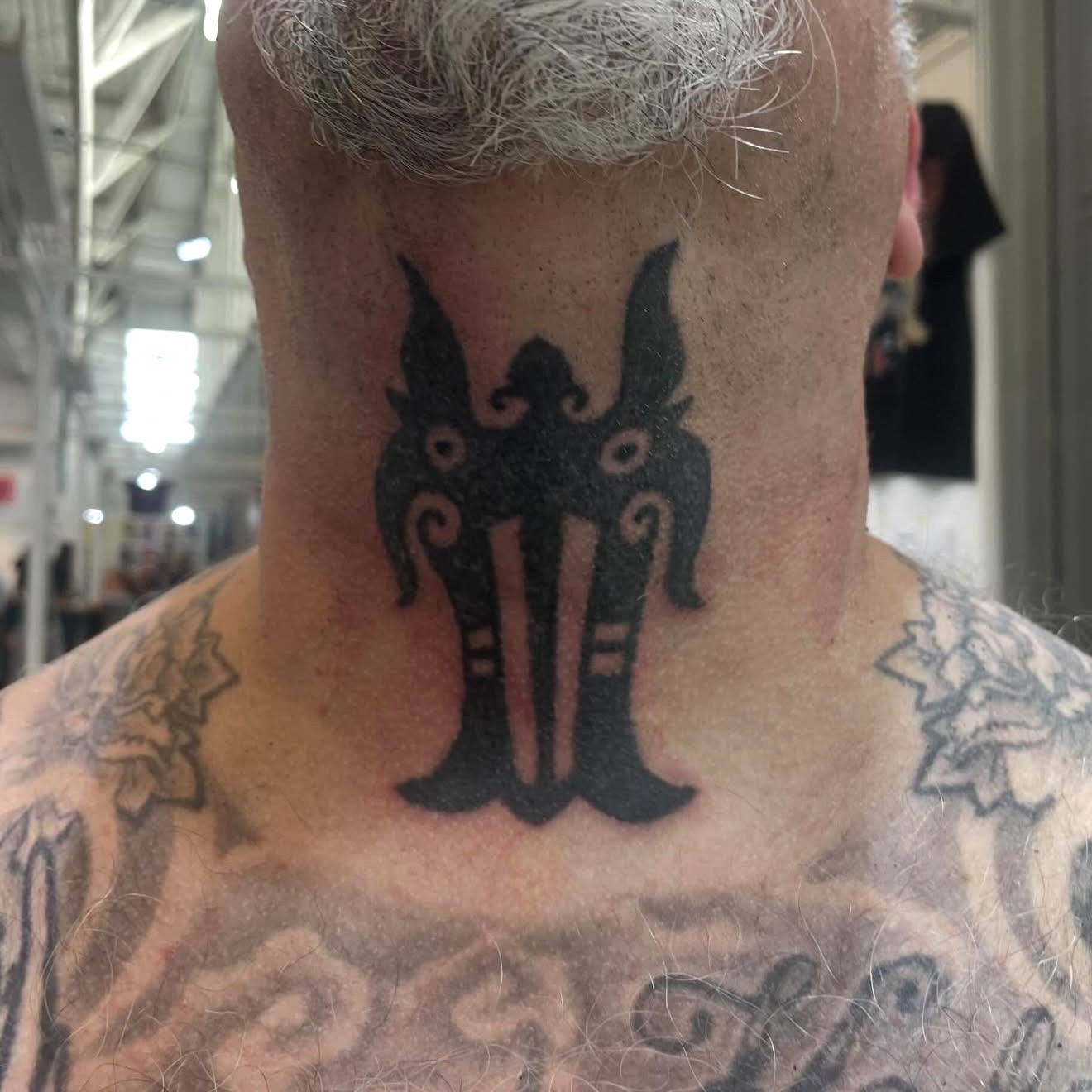
Among the Iban, the first tattoo a young man traditionally received was the bunga terung, the eggplant flower, placed beneath the collarbone where a pack strap would rest, marking his readiness for bejalai, the journey away from the longhouse in search of knowledge and standing. Worn before the bejalai, it was understood to lend strength for the journey, and as the man traveled between Iban communities he earned further marks until his body served as a map of where he had been.
At the center of the flower sits a spiral the Iban call the tali nyawa, the rope of life, likened to a tadpole and the beginning of new life, and scholars note the application sequence differed between the Iban of Sarawak and those of Kalimantan. The practice faded through the 20th century as missionaries spread Abrahamic beliefs that forbade skin modification, though over roughly the last fifteen years younger Iban have revived the tradition deliberately.
Those who carry it forward
The Keepers
10 artists
Jeremy Monkey
Iban